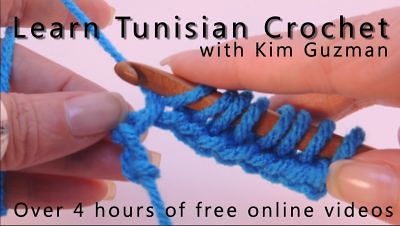
Tunisian crochet curls. It’s the nature of the craft. And some stitches curl more than others. Either take advantage of the curling like you would with a rolled brim hat or use these 10 of my best tips to stop the curling.
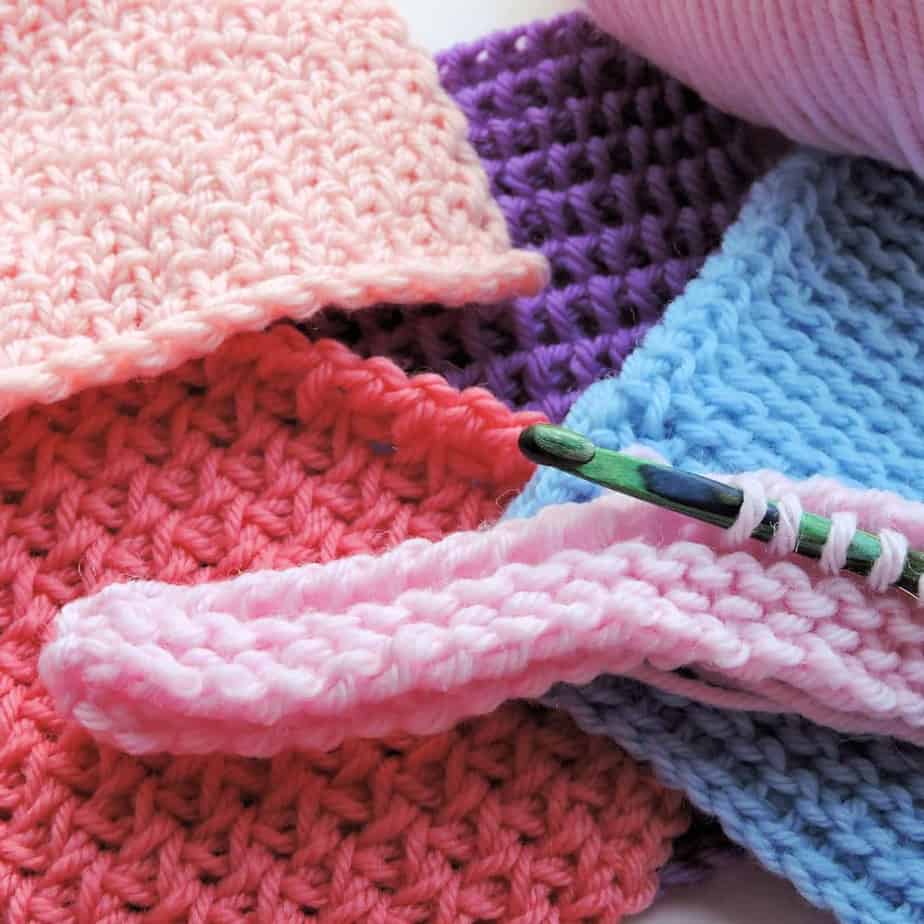
Tunisian crochet curls wonderfully for a rolled brim on this Tunisian crochet felted hat.

But there are times when you don’t want the curl, and here are some tips to help reduce or remove the curling.
Top 10 Designer Tips
- Use a larger hook.
- Work a few rows of Tunisian Reverse Stitch at the beginning.
- Work a few rows of Tunisian Purl Stitch at the beginning.
- Work a few rows of any variation of seed stitch at the beginning.
- Use a pattern in which the designer has provided the method of removing the curl.
- Use a fiber which will block out after finishing.
- Apply a heavy border after finishing.
- Work one or two rows of Tunisian Double Stitch at the beginning.
- Work one or two rows of Tunisian Extended Stitch at the beginning.
- Work in a lace stitch pattern which rarely curls much.
- Add ribbing at the beginning.
Video Support
All stitches mentioned above can be found in my free online videos here.
Practice
Visit our Tunisian Crochet Stitch Library and find some new stitches to practice.
Learn Tunisian Crochet
I have written over a dozen books on Tunisian crochet and have had more Tunisian crochet projects published than anyone. If you don’t know how to Tunisian crochet, let me teach you with my over four hours of free online videos. Right- and left-handed versions available. CLICK HERE.